Four Reasons To Join A Church

This Sunday I have the privilege of kicking off the next round of church membership classes. If you attend Fellowship and are interested in these classes, you can find out more information by clicking here.

But maybe, for others of you, you’re not sure if you want to be a member of a church.  You may even wonder why anyone would become a member of a church.  And you can’t help but ask, “What’s so bad about just attending a church?”

Well in preparation for this Sunday allow me to give you four good reasons you should prayerfully consider becoming a member of your church.

You should become a church member…

1.  To Join a Community

All of us are in need of community. Every one of us needs love, encouragement, forgiveness, accountability, grace, and a whole host of other things which can only be found through relationships with people. In the New Testament the word for “community” is the Greek word koinonia. It literally means “participation”. In 1 Corinthians 10:16-17 Paul used the word koinonia when writing about the sacrament of Communion.  His point is every time we participate in the Lord’s Supper we commune (or have community) with Christ. Now the same word koinonia is also translated “fellowship” in Acts 2:42: “They devoted themselves to the apostles’ teaching and to fellowship, to the breaking of bread and to prayer.” Believers were meant to live in koinonia, that is participate in community with believers in the same way we choose to participate in communion with Christ. You can’t have one without the other. Jesus even calls the church his body making it even more clear that to participate in the church is to participate in him, or to have community with him. Becoming a church member is saying, “I recognize my need for koinonia-fellowship, and I want to live in community with with Christ and his body.”

2. To Show Up to Build Up

What is the essence of participating in community? It is choosing to show up in order to build up.  As Hebrews 10:24-25 says, “And let us consider how we may spur one another on toward love and good deeds, not giving up meeting together, as some are in the habit of doing, but encouraging one another—and all the more as you see the Day approaching.” There comes a point when believers no longer show up to worship services, discipleship groups, and service opportunities to be served but to serve. Becoming a member of a church is saying, “I want to  to spur others on toward love and good deeds and I am choosing this community of believers to encourage.”  To take this step is to identify with Jesus in a new and deeper way. “For even the Son of Man did not come to be served, but to serve, and to give his life as a ransom for many” (Mark 10:44-45).

3.  To Evangelize Your City

But becoming a church member is not just about encouraging those inside the church. The local church can be the best way to evangelize a community. Mark Dever points out, “When we act together, we can better spread the gospel at home and abroad. We can do this by our words, as we share the good news with others, and as we help others to do so. A local church is, by nature, a missionary organization.”* If you have a love for your community–a heart for the lost at home or abroad–then becoming a member of your church is one of best things you can do to reach people for Christ.

4. To Join Jesus in His Mission

And this led me to the fourth and most important reason: becoming a member of a church is becoming serious about joining Jesus and his mission.  I love the video below. Bill  Hybels shows why committing to a local church is absolutely necessary for every believer…

If you believe the “church is the hope of the world” because “it stewards the message of Christ,” then commit to a community of believers so that you can, together with other believers, more effectively bring the hope of Christ to someone else.


_______________________________________________________________________

* Mark Dever Nine Marks of a Healthy Church pp.164-165

How To Become Silent Before God

The other week I wrote about Lectio Divina. One of my favorite ways to go deeper with the Bible. In that post, I made the point that if you want to hear from God, you have to learn to be silent before God. But I never actually described how a person becomes silent before God. And the truth is, being silent before God is actually quite hard. Maybe you have noticed this.

Because by quiet, I don’t mean just siting before God without talking. Though let’s be honest even that is hard enough sometimes. No, by quite I mean, quite in your soul, and in your mind. It is to “Be still…”. (Ps. 46:10).

Quiet before God is when you have no burdens weighing you down. No thoughts racing through your mind. No stress inside of you. When you are quiet before God there is a sense of feeling empty. But a good empty. An empty like a drinking glass is empty just before it is filled with water. An emptiness that is ready to be filled with the living presence of God.

So how does one actually enter into this kind of silence before God?

 “palms down palms up”

One method, which has most helped me, is what Richard Foster calls “palms down palms up”. He writes,

“Begin by placing palms down as a symbolic indication of your desire to turn over any concerns you may have to God. Inwardly you may pray ‘Lord, I give to you my anger toward John. I release my fear of my dentist appointment this morning. I surrender my anxiety over not having enough money to pay the bills this month. I release my frustration over trying to find a baby-sitter for tonight.’ Whatever it is that weighs on your mind or is a concern to you, just say, ‘palms down.’ Release it. You may even feel a certain sense of release in your hands. After several moment of surrender, turn your palms up as a symbol of your desire to receive from the Lord. Perhaps you will pray silently: ‘Lord, I would like to receive your divine love for John, your peace about the dentist appointment, your patience, your joy.’ Whatever you need, you say ‘palms up.’ Having centered down, spend the remaining moments in complete silence. Do not ask for anything. Allow the Lord to commune with you, to love you. If impressions or directions come, fine; if not fine.”[1]

Over the years I have added variations to this “palms down palms up”. Usually when I want to be silent before God I start with my hands out in front of me in a pushing position. Then every time I confess something that is on my mind I imagine that I am pushing it away from me and toward Jesus. Then I imagine Jesus literally taking each of my burdens. I do this until I can’t think of anything else to give over to Jesus—until I feel quiet and empty. Only then do I turn over my palms, and receive the gift God has for me.

For me “palms down palms up” (or some variation of it) has been the most effective way for me to enter into silence before God, in preparation to hear from God. I pray it works just as well for you too. If you’re interested in other Christian practices that have long helped people enter into the presence of God, I would highly recommend Richard Foster’s Celebration of Discipline: The Path to Spiritual Growth.


[1] Richard Foster Celebration of Discipline: The Path to Spiritual Growth 30-31

The Greatest of Fridays

No Friday Fun post this week. Instead just a reminder of what happened on the Greatest of Fridays.

Surely he took up our pain  and bore our suffering, yet we considered him punished by God, stricken by him, and afflicted. But he was pierced for our transgressions, he was crushed for our iniquities; the punishment that brought us peace was on him (Isaiah 53:4-5)

 God presented Christ as a sacrifice of atonement, through the shedding of his blood—to be received by faith. (Romans 3:25)

Christ redeemed us from the curse of the law by becoming a curse for us, for it is written: “Cursed is everyone who is hung on a pole. (Galatians 3:13)

Christ died for sins once for all, the righteous for the unrighteous, to bring you to God’ (1 Peter 1:18)

“He himself bore our sins” in his body on the cross, so that we might die to sins and live for righteousness; “by his wounds you have been healed. (1 Peter (2:24)

This is love: not that we loved God, but that he loved us and sent his Son as an atoning sacrifice for our sins. (1 John 4:10)

Going Deeper With The Bible

At some point reading your Bible becomes boring. You know all the stories. You’re familiar with the popular verses. And you have a pretty good sense of what the whole thing is about.

You begin to wonder, “now what?” “Am I doomed to a life of begrudgingly re-reading the same things year after year? Or is there something more?”

Thankfully there is more– a lot more!

If you’ve only been reading the Bible,  you may have given yourself a breadth of biblical  knowledge. But what you lack is depth. Likely your boredom with Bible reading is the Holy Spirit’s way of telling you that your soul is ready for something more. That you need something deeper.

One of my favorite ways to go deeper,  is a method of Bible reading called Lectio divina (pronounced lex-ee-oh di-vee-nuh).  It means “divine reading”. For over 1, 500 years Christians have practiced it in order to hear from God, and draw closer to Christ.

Here’s how it works:780px-Lectio_Divina_.svg

Dr. Richard Peace, professor of Spiritual Formation,  describes it as a four-part movement “beginning with the the text and ending in prayer.” [1]   The four movements are as follows:

Reading/Listening: Read aloud a short passage Scripture. As you read, listen for the word or phrase that speaks to you. What is the Spirit drawing your attention to?

Meditating: Repeat aloud the word or phrase to which you are drawn. Make connection between it and your life. What is God saying to you by means of this word or phrase?

Praying: Now take these thoughts and offer them back to God in prayer, giving thanks, asking for guidance, asking for forgiveness, and resting in God’s love. What is God leading you to pray?

Contemplating: Move from the activity of prayer to the stillness of contemplation. Simply rest in God’s presence. Stay open to God. Listen to God. Remain in peace and silence before God. How is God revealing himself to you?

 Lectio divina is more than a  simple “quiet time”. It takes intentionally getting to a quiet place with no distractions. It also takes practice. Learning to listen to God, is like learning how to use a new muscle. There’s nothing “magical” about it. But it won’t happen until you’re able to sit still, and be silent before God.

If you want to learn more about the practice of Lectio divina, I would start with a copy of Richard Peace’s Contemplative Bible Reading: Experiencing God Through Scripture. It is a short Bible Study handbook that provides more detail about the four movements. It also includes examples of how the process works with different passages of Scripture. The study can be used for an individual or groups. So if your currently in a small group and you think your group might also be interested in going deeper with the Bible, then this might be a great study to do together.

Whether you use Lectio divina by yourself or with a group, I pray it will be something that will draw you deeper into the Word of God, and closer to God through Jesus Christ.


Will This Movie Help Me Witness?

Son of God. Noah. God Is Not Dead. It’s been a season for religious movies. And there are more to come.  Are these opportunities for us to engage our unbelieving friends, co-workers, and family members? Maybe. But how?

Before I go to a movie, in hopes of using it as a witnessing tool, I first determine if it is worth seeing in the first place. To do that I usually ask myself something close to the following ten questions.

  1. Do I know unbelievers who will go see this movie?
  2. Do I know unbelievers who will want to talk about this movie?
  3. Am I willing to actually take unbelievers to the movie or talk to them about this movie?
  4.  Is the movie an accurate depiction of what it claims to be? Does the movie claim to be a story of actual events, a story based on actual events, a story inspired by actual events, or just a story? And is it faithful to that intended end?
  5. Does the movie treat the antagonist with the same dignity as the protagonist?
  6. Does the movie accurately depict elements of the human condition? (e.g. a sense or human depravity, the need to be rescued, a longing for hope)
  7. Does the movie depict evil as evil and good as good?
  8. Does the movie have a clear redemptive message? Or does it at least leave the audience longing for a redemptive message?
  9. Will this movie open up dialogue or does it perpetuate destructive stereotypes?
  10. Is this movie actually a good movie? (acting, storyline, production values, music etc.)

If I can answer ‘yes’ to most of these questions, then I will likely go see it.

Once I’ve seen the movie then it is time to think about how I can bring it up in a conversation, bible study, or a sermon. The way I tend to do that, is to ask myself the following five questions.

  1. How is Jesus the better savior/hero/answer to the ultimate need/dilemma/question of the movie?
  2. If Jesus was inserted into the movie, how would it have been different? What would he have said to the different characters?
  3. If Jesus was actually in the movie, what were his most meaningful moments in the movie?
  4. What does the Bible say about the events depicted in the movie?
  5. What was the overall message of the movie? How is it similar or dissimilar to the overall message of the Bible?

There is no doubt that movies, both religious and non-religious can be excellent tools for witnessing. Of course not all movies are created equally. But I have found that when I take the time to determine whether or not the movie is worth seeing. And then take the time to think about how it might be used in a conversation. Jesus gives me the opportunity to use the movie as a fruitful means of talking about who he is, what he has done, and what he is doing now.

Expectations of Jesus

What are your expectations of Jesus?

On Psalm Sunday the crowds praised Jesus shouting “Hosanna in the highest”. But the following Friday they chanted “crucify him!”

How could a crowd of people have such a dramatic change of heart in just six days?

The short answer– Jesus did not meet their expectations.

When the crowds shouted “Hosanna” to Jesus, they did so because they believed he was the Messiah. The one who had come to save God’s people. But not just in a spiritual sense, but in a political sense. As New Testament scholar Dr. Craig Evans asserts, most Jews expected Jesus to overthrow the Romans government.  Evans, draws on commentary from the Dead Sea Scrolls to give us insight into the Messianic expectations of the Jews.   He points to the commentary on Isaiah 10:34-11:5, which speaks of the Messiah as the “Branch of David, who will destroy Israel’s enemies, [specially] the Romans (called the “Kittim”).”[1] And also the commentary on Isaiah 10:34-11:1 which says, “it is said that [the Messiah] will put to death the “king of the Kittim,” or the Roman emperor.”[2]

In the minds of the crowd, Jesus as the Messiah, had come to set up God’s kingdom on earth. So imagine their surprise when six days later they saw Jesus bound in chains, standing as a prisoner before Pontius Pilate, the Roman governor. For them, in that moment, it was no longer possible that Jesus could be the Messiah. Because how could God’s chosen king be in Romans shackles? Feeling hurt and likely very hopeless, their hearts became hard, and they turned on Jesus. And thus, chanted for his crucifixion.

The thing is, the crowd’s expectations of Jesus were incomplete. Their minds were set on the promised political victory of the Messiah and not the promised suffering of the Messiah. They were not thinking about messianic passages such as Isaiah 53:3-5:

3 He was despised and rejected by mankind, a man of suffering, and familiar with pain. Like one from whom people hide their faces he was despised, and we held him in low esteem.

4 Surely he took up our pain and bore our suffering, yet we considered him punished by God, stricken by him, and afflicted.

5 But he was pierced for our transgressions, he was crushed for our iniquities; the punishment that brought us peace was on him, and by his wounds we are healed.

Because the Palm Sunday crowds did not include Isaiah 53 in their expectations of the Messiah, they changed from worshipers of Jesus to enemies of Jesus—in just six days.

All of us have certain expectations of Jesus. But are those expectations complete? In parts of our life are we in danger of moving from worshipers of Jesus to enemies of Jesus, because it feels like Jesus is not meeting our expectations?

We must remember that Jesus did come to meet our expectations, but his. And to the degree that our expectations for him are different than his expectations, is to the degree that we will no longer shout “Hosanna” but instead “crucify him”.

Family Worship

“What do you do for family worship?”

That was the question I asked my volunteer leaders about six months ago. I asked not because I wanted to check up on their family’s spiritual health. I asked because I was honestly looking for ways in which I could lead my family in worship.

Growing up, my family (although Christian) did not practice family worship. And even though I am a pastor, the idea of worshiping with my family by ourselves at home still feels a little awkward. We have, for a while, prayed together at night, and often even read the Bible together. But I still felt like I wasn’t very good at it. There were restless kids constantly getting up and down. There was yelling. There was crying. There were stuffed animal friends missing.   There was fighting over what to read and who got to hold what. There were tantrums so dramatic that I was tempted to cast out demons.

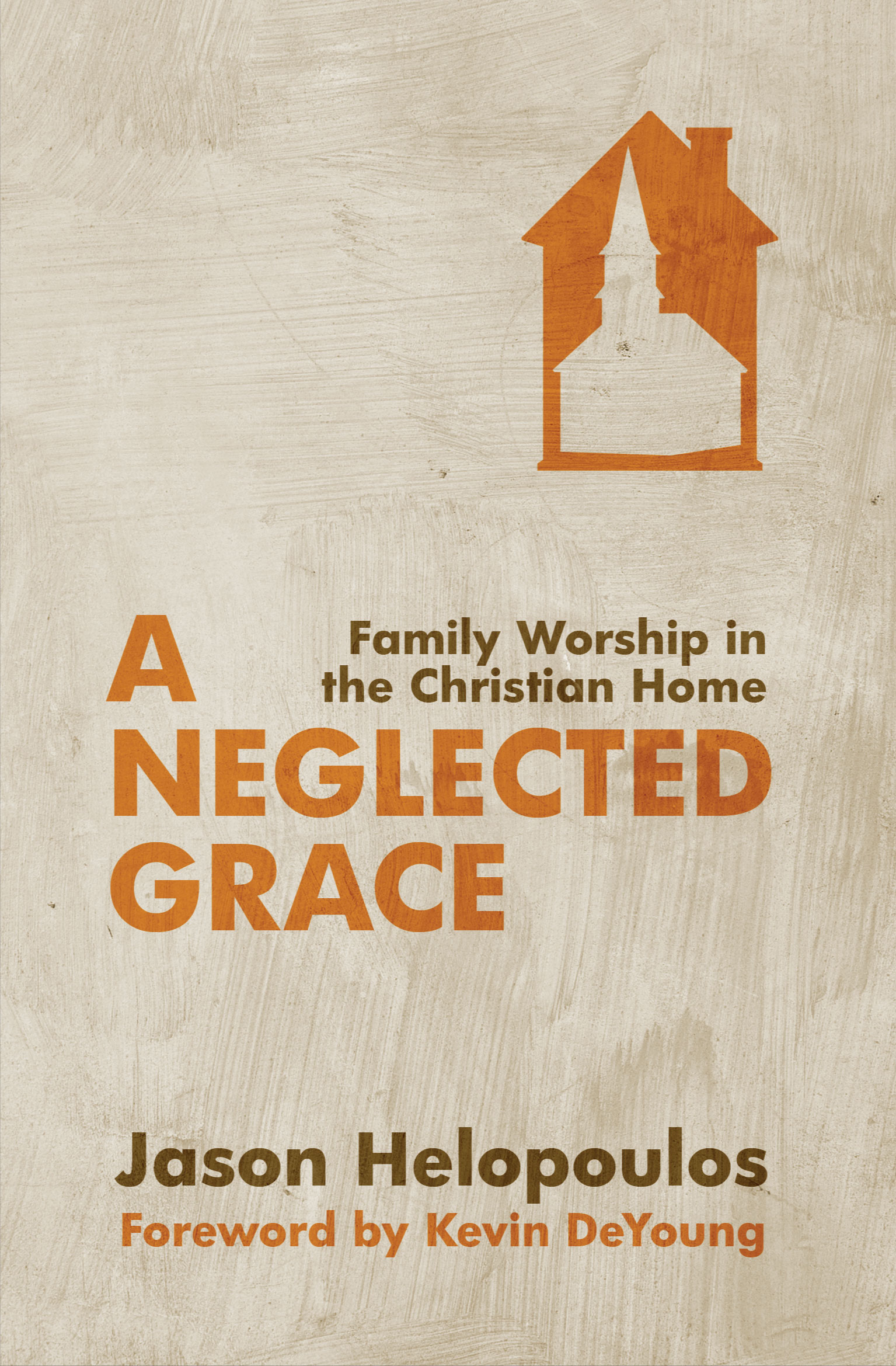
Then I came across an excellent book entitled A Neglected Grace: Family Worship in the Christian Home by Jason Helopoulos (yeah, I’m not sure how pronounce his last name either). Now the book didn’t magically fix everything. But it has given me a much better paradigm and model for family worship. And it is a book I would highly recommend to you for five reasons.

  1. It’s short. At 126 pages you could easily read it in a week.
  2. It’s biblical. Jason gives a great overview of family worship in the Bible, and demonstrates, from the Bible, why family worship is worth pursuing today.
  3. It’s relatable. Jason knows that, for most people, family worship is new and out of their comfort zone. So he provides real-life testimonies from regular families on the benefits of family worship.
  4. It’s incredibility practical. Jason offers some great practical models of what family worship can look like. He even has age-appropriate discussion questions for parents to ask their children as they read through the Bible.
  5. It’s from a perspective of grace. Jason is not challenging parents to add one more thing to their already full plate. For him, “Family worship is an instrument through which God gives us grace…It is not something that should be a burden. It is a joy.” Jason’s desire throughout the book is to help families experience more of God’s grace.

If you’re a parent or grandparent who wants to see your family grow in God’s grace, I would encourage you to get this book.

Family worship is by no means perfect at our house. But I can already see the benefits of making the effort. I love hearing my kids sing worship songs, I love hearing my kids pray, and I love hearing my oldest read the Bible. Every night these things happen we experience God’s  grace in our family.


Joe Carter on 9 Things You Should Know About The Chronicles of Narnia

As,  The Chronicles of Narnia is one of my favorite series, I thought this was a pretty cool article. Enjoy!

———————————————————————————————————————-

The end of March marked the sixty-fifth anniversary of C.S. Lewis completing The Lion, the Witch and the Wardrobe, the first book in The Chronicles of Narnia series. Here are nine things you should know about the Lewis’ beloved novels:


Read the nine things here