Category Archives: Jesus
The Greatest of Fridays
No Friday Fun post this week. Instead just a reminder of what happened on the Greatest of Fridays.
Surely he took up our pain and bore our suffering, yet we considered him punished by God, stricken by him, and afflicted. But he was pierced for our transgressions, he was crushed for our iniquities; the punishment that brought us peace was on him (Isaiah 53:4-5)
God presented Christ as a sacrifice of atonement, through the shedding of his blood—to be received by faith. (Romans 3:25)
Christ redeemed us from the curse of the law by becoming a curse for us, for it is written: “Cursed is everyone who is hung on a pole. (Galatians 3:13)
Christ died for sins once for all, the righteous for the unrighteous, to bring you to God’ (1 Peter 1:18)
“He himself bore our sins” in his body on the cross, so that we might die to sins and live for righteousness; “by his wounds you have been healed. (1 Peter (2:24)
This is love: not that we loved God, but that he loved us and sent his Son as an atoning sacrifice for our sins. (1 John 4:10)
Will This Movie Help Me Witness?
Son of God. Noah. God Is Not Dead. It’s been a season for religious movies. And there are more to come. Are these opportunities for us to engage our unbelieving friends, co-workers, and family members? Maybe. But how?
Before I go to a movie, in hopes of using it as a witnessing tool, I first determine if it is worth seeing in the first place. To do that I usually ask myself something close to the following ten questions.
- Do I know unbelievers who will go see this movie?
- Do I know unbelievers who will want to talk about this movie?
- Am I willing to actually take unbelievers to the movie or talk to them about this movie?
- Is the movie an accurate depiction of what it claims to be? Does the movie claim to be a story of actual events, a story based on actual events, a story inspired by actual events, or just a story? And is it faithful to that intended end?
- Does the movie treat the antagonist with the same dignity as the protagonist?
- Does the movie accurately depict elements of the human condition? (e.g. a sense or human depravity, the need to be rescued, a longing for hope)
- Does the movie depict evil as evil and good as good?
- Does the movie have a clear redemptive message? Or does it at least leave the audience longing for a redemptive message?
- Will this movie open up dialogue or does it perpetuate destructive stereotypes?
- Is this movie actually a good movie? (acting, storyline, production values, music etc.)
If I can answer ‘yes’ to most of these questions, then I will likely go see it.
Once I’ve seen the movie then it is time to think about how I can bring it up in a conversation, bible study, or a sermon. The way I tend to do that, is to ask myself the following five questions.
- How is Jesus the better savior/hero/answer to the ultimate need/dilemma/question of the movie?
- If Jesus was inserted into the movie, how would it have been different? What would he have said to the different characters?
- If Jesus was actually in the movie, what were his most meaningful moments in the movie?
- What does the Bible say about the events depicted in the movie?
- What was the overall message of the movie? How is it similar or dissimilar to the overall message of the Bible?
There is no doubt that movies, both religious and non-religious can be excellent tools for witnessing. Of course not all movies are created equally. But I have found that when I take the time to determine whether or not the movie is worth seeing. And then take the time to think about how it might be used in a conversation. Jesus gives me the opportunity to use the movie as a fruitful means of talking about who he is, what he has done, and what he is doing now.
Expectations of Jesus
What are your expectations of Jesus?
On Psalm Sunday the crowds praised Jesus shouting “Hosanna in the highest”. But the following Friday they chanted “crucify him!”
How could a crowd of people have such a dramatic change of heart in just six days?
The short answer– Jesus did not meet their expectations.
When the crowds shouted “Hosanna” to Jesus, they did so because they believed he was the Messiah. The one who had come to save God’s people. But not just in a spiritual sense, but in a political sense. As New Testament scholar Dr. Craig Evans asserts, most Jews expected Jesus to overthrow the Romans government. Evans, draws on commentary from the Dead Sea Scrolls to give us insight into the Messianic expectations of the Jews. He points to the commentary on Isaiah 10:34-11:5, which speaks of the Messiah as the “Branch of David, who will destroy Israel’s enemies, [specially] the Romans (called the “Kittim”).”[1] And also the commentary on Isaiah 10:34-11:1 which says, “it is said that [the Messiah] will put to death the “king of the Kittim,” or the Roman emperor.”[2]
In the minds of the crowd, Jesus as the Messiah, had come to set up God’s kingdom on earth. So imagine their surprise when six days later they saw Jesus bound in chains, standing as a prisoner before Pontius Pilate, the Roman governor. For them, in that moment, it was no longer possible that Jesus could be the Messiah. Because how could God’s chosen king be in Romans shackles? Feeling hurt and likely very hopeless, their hearts became hard, and they turned on Jesus. And thus, chanted for his crucifixion.
The thing is, the crowd’s expectations of Jesus were incomplete. Their minds were set on the promised political victory of the Messiah and not the promised suffering of the Messiah. They were not thinking about messianic passages such as Isaiah 53:3-5:
3 He was despised and rejected by mankind, a man of suffering, and familiar with pain. Like one from whom people hide their faces he was despised, and we held him in low esteem.
4 Surely he took up our pain and bore our suffering, yet we considered him punished by God, stricken by him, and afflicted.
5 But he was pierced for our transgressions, he was crushed for our iniquities; the punishment that brought us peace was on him, and by his wounds we are healed.
Because the Palm Sunday crowds did not include Isaiah 53 in their expectations of the Messiah, they changed from worshipers of Jesus to enemies of Jesus—in just six days.
All of us have certain expectations of Jesus. But are those expectations complete? In parts of our life are we in danger of moving from worshipers of Jesus to enemies of Jesus, because it feels like Jesus is not meeting our expectations?
We must remember that Jesus did come to meet our expectations, but his. And to the degree that our expectations for him are different than his expectations, is to the degree that we will no longer shout “Hosanna” but instead “crucify him”.
Was Indiana Jones Right About The Holy Grail?

Getty Image
Last week, two Spanish historians claimed to have discovered the Holy Grail– a cup which Jesus supposedly drank from at the Last Supper.
Now, I’m very skeptical of this claim—but not for the reason a lot of other people are. Most skeptics, are skeptics because they believe the cup in question is far too eloquent for Jesus. Because Jesus was an economically strapped carpenter’s son. This belief was made famous in one of my favorite movies, Indiana Jones And The Last Crusade.
But is it true? Would Jesus have only used a cup that was unadorned and ordinary?
I obviously can’t say for sure, but let me give you a couple of reasons I think it was possible that Jesus could have drank from a very ornate challis.
Jesus may have been the son of a carpenter, but he had wealthy friends.
There was the disciple Matthew, a former tax collector, who hosted Jesus at a lavish party. There was Zacchaeus a chief tax collector, who after believing in Jesus gave away enormous amounts of wealth. There was the women who poured expensive perfume over Jesus. And there was Joseph of Arimathea, who used his wealth to provide the tomb for Jesus. Jesus was comfortable with people from every social and economic background. And although he often preached about the abuses and misuse of wealth, he had no problem rubbing shoulders with people using their wealth to bring honor to God.
Jesus did not use his own resources for the Last Supper, someone else did.
Matthew 26:18-19 tells us,
On the first day of the Festival of Unleavened Bread, the disciples came to Jesus and asked, “Where do you want us to make preparations for you to eat the Passover?”
He replied, “Go into the city to a certain man and tell him, ‘The Teacher says: My appointed time is near. I am going to celebrate the Passover with my disciples at your house.’” 19 So the disciples did as Jesus had directed them and prepared the Passover.
Jesus celebrated the Last Supper at the house of someone else. The house of a man that respected Jesus enough to call him “Teacher”. Given Jesus’ other associates, it is quite possible this man was wealthy. And if this “man” was wealthy, it is easy to imagine Jesus drinking and eating with his disciples from ornate dinnerware.
I have been blessed by the generosity of wealthy Christians enough to know that when they provide for you, they do so, not with your standard of living in mind, but with theirs. In others words generous believers are generous with their stuff. They love to share. The generous people I know, would have no problem letting a “carpenter’s son” use their fine china– especially if they knew that carpenter’s son was also the Son of God.
Did Jesus drink from an elegant, and very expensive cup at the Last Supper? Maybe, maybe not. But if he didn’t it wasn’t because he was a carpenter’s son.
When God pours out his grace and provides for a person’s needs, he doesn’t do so based on where a person came from, or their current social-economic status. No God pours out his lavish grace and provisions, based on who he is, and his social and economic status. If Jesus had wealthy friends who loved God and reflected the character of God, we would expect them to treat others the same way God had treated them. We would expect them, to use their wealth to bring God’s grace and abundance to others.
If the discovering by the historians is authenticated and it turns out Jesus did in fact drink from a lavish cup. It will only serve as a beautiful picture of God’s lavish grace. Jesus as the “poor man” was allowed to drink from a cup he did not pay for, just as we who are poor are allowed to drink from the cup of salvation we did not pay for.
Then he took a cup, and when he had given thanks, he gave it to them, saying, “Drink from it, all of you. This is my blood of the covenant, which is poured out for many for the forgiveness of sins. (Matthew 26:27-28)
And God raised us up with Christ and seated us with him in the heavenly realms in Christ Jesus, in order that in the coming ages he might show the incomparable riches of his grace, expressed in his kindness to us in Christ Jesus. For it is by grace you have been saved, through faith—and this is not from yourselves, it is the gift of God— (Ephesians 2:6-8)
Believers vs. Disciples
Is a believer in Jesus the same thing as a disciple of Jesus?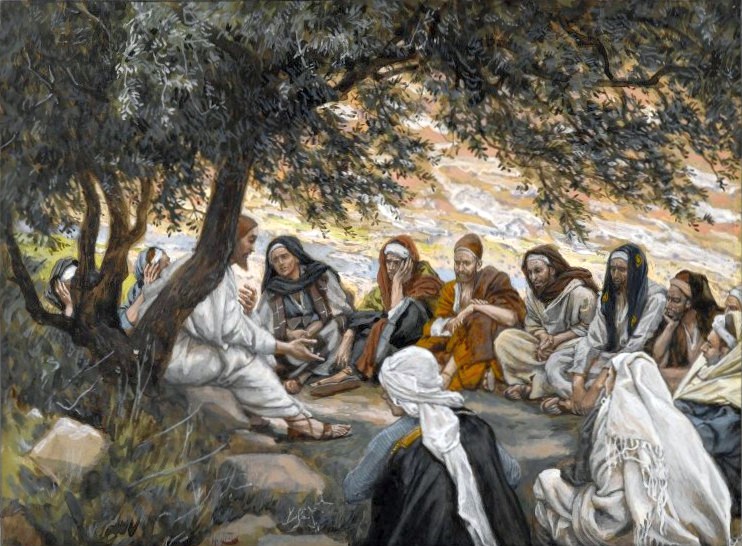
I’ll admit as a pastor I’ve used the terms synonymously. But more and more I think to do so can be dangerous.
The Gospel writers did not see believers and disciples as synonymous. For them, believers and disciples represented two different groups of people. To be sure there was some overlap. A disciple of Jesus was a believer in Jesus, but a believer in Jesus was not necessarily a disciple of Jesus.
In the Gospels, what Jesus required of a disciple was different than what he required of a believer. And because of that, the rewards Jesus promised to a disciple were very different than the rewards he promised to a mere believer.
Believers
Jesus called many people to believe in him. And the Gospel of John, frequently tells us that “many people believed in Jesus”. But it seems that out of the many who believed, many did not follow. For example after Jesus ministered to the Samaritan Woman, her village welcomed Jesus, believed in Jesus, yet did not follow Jesus. John 4:40-42 says,
So when the Samaritans came to him, they urged him to stay with them, and he stayed two days. And because of his words many more became believers. They said to the woman, “We no longer believe just because of what you said; now we have heard for ourselves, and we know that this man really is the Savior of the world.”
But then in verse 43 Jesus leaves for Galilee and no one from Samaria followers him. In fact throughout the Gospels there is no indication that anyone from Samaria joined the crowds of disciples that followed Jesus. It seems the people physically stayed where they lived and went back to their normal life. The only difference was that now they believed that Jesus was the Savior of the world.
How will these believers in Jesus be rewarded?
Yet to all who did receive him, to those who believed in his name, he gave the right to become children of God (John1:12)
For God so loved the world that he gave his one and only Son, that whoever believes in him shall not perish but have eternal life. For God did not send his Son into the world to condemn the world, but to save the world through him. Whoever believes in him is not condemned… (John 3:16-18)
All believers are rewarded with being adopted into the family of God, and receiving eternal life. These of course are great and wonderful acts of God’s grace. But they are not the only rewards offered by God. There are greater rewards for a disciple.
Disciples
When Jesus called people to be his disciple he raised the stakes from believing in him, to dying with him.
Then Jesus said to his disciples, “Whoever wants to be my disciple must deny themselves and take up their cross and follow me (Matthew 16:24)
Large crowds were traveling with Jesus, and turning to them he said: “If anyone comes to me and does not hate father and mother, wife and children, brothers and sisters—yes, even their own life—such a person cannot be my disciple. And whoever does not carry their cross and follow me cannot be my disciple. (Luke 14:25-27)
To be a disciple of Jesus was serious business. It obviously required more than praying the sinners prayer, and asking Jesus into your heart. Jesus called people to not only believe in him, but submit to him, and physically follow him.
To be a disciple required death. Death to calling your own shots. Death to the idols of your heart. Death to other people’s opinions and expectations of you. Death to finding your security in the things of the world. Death to your version of success. Death to finding significance outside of Jesus. Death to letting your life be about anything else other than following Jesus.
The Apostle Paul understood this when he wrote:
If we live, we live for the Lord; and if we die, we die for the Lord. So, whether we live or die, we belong to the Lord. (Romans 14:8)
So, how will disciples of Jesus be rewarded?
For whoever wants to save their life will lose it, but whoever loses their life for me will find it (Matthew 16:25)
Jesus said to them, “Truly I tell you,…everyone who has left houses or brothers or sisters or father or mother or wife or children or fields for my sake will receive a hundred times as much and will inherit eternal life. But many who are first will be last, and many who are last will be first. (Matthew 19:29-30)
The first reward for a disciple of Jesus is life. The Greek word used in verse Matthew 16:25 is “psychē” . It can also be translated “soul”. Jesus is saying the disciples reward is deep soul-life.
But more than life for your soul, Jesus also promises rewards in heaven. To give up something for Jesus is like making a deposit, or investment in future rewards in heaven. And Jesus pays enormous returns (100 times) to those invest in him.
Believers will go to heaven. But to the degree that they did not invest in Jesus on earth is to the degree that they will miss out on rewards from Jesus in heaven. To be sure heaven is joyful place for everyone who is there. But that doesn’t mean that everyone’s experience is the same. Jesus is clear, what you do on earth affects your experience of heaven. And for disciples of Jesus, the experience is better.
Maybe, this is one reason why Jesus wants disciples, and not just believers.
“All authority in heaven and on earth has been given to me. 19 Therefore go and make disciples of all nations, baptizing them in the name of the Father and of the Son and of the Holy Spirit, 20 and teaching them to obey everything I have commanded you. And surely I am with you always, to the very end of the age.”(Matthew 28:18-20)
How To Help Students Stop Sinning
Don’t do this! Work harder to do this!
Is our job as pastors, parents, and youth leaders, just to help students stop sinning?
It can often feel that way.
But ask yourself, what’s the point of telling a student not to sin? Even if they stop with one sin, aren’t they just going to commit another sin later?
What then, should we do?
Should we just give up encouraging students to live moral lives? Should we not tell them what the Bible says about sin and its consequences? Of course not.
But what we should do, is help students understand why they sin in the first place.
James 1:14 says “But each person is tempted when he is lured and enticed by his own desire.”
Sin happens when we try to meet a good desire in the wrong way.
When I was in 5th grade a friend of mine introduce me to pornography. I’d like to say I ran the other way, and never looked back. But I didn’t. I looked, and I looked a lot. But the reason I looked was not because I wanted to rebel against God or my parents, or do something that was wrong. I looked because I desperately wanted my friend to like me. I looked because I had a deep desire to be wanted. And in those moments that desire was fulfilled. I was accepted by my friend, and I felt wanted. My problem was not that I liked pornography, my problem was that my heart was empty.
I have been in some kind of pastoral role to students for over ten years now. And I have often thought about what I as a student needed back then to change my behavior. I know without a doubt that I did not need someone to tell me to stop, or show me from the Bible how pornography was wrong. I had been a Christian since I was four– I knew all that. What I did need was someone to help me understand what was behind my sin. And then how Jesus could help me.
G. K. Chesterton is attributed with saying “Every man who knocks on the door of a brothel is looking for God.” I believe more and more everyday these words are true.
I still have the desire to be wanted. But unlike my fifth grade self, I now know the right way to have that desire met. His name is Jesus Christ. And there is no desire he cannot abundantly meet. His love is often made tangible through his body, Christians, like my wife, accountability partners, family, and friends. But it is his love meeting my desires that has, and will, keep me free from such sin.
The best thing we as pastors, parents, and youth leaders can do for students, is not to help them stop sinning. Because, life is not just about not sinning.
Rather, the best thing we as pastors, parents, and youth leaders can do, is to help students identify their deepest God-given desires. And then, show them how Jesus can abundantly fulfill them. When this happens they will know the love of Jesus and his body (the church), and the temptation to sin will take care of its self.
Matthew On Denying Oneself
If you would have asked me last month, what is the theme of the Gospel of Matthew? I would have told you it is a gospel dedicated to showing Jesus to be the true King/Messiah of God’s people. And though I still think that is true, after studying for this week’s sermon, a second theme has become glaringly obvious. It is the theme of Self Denial/Sacrifice. Just look at this survey of verses from Matthew’s gospel: 
4:4 “‘Man shall not live by bread alone, but by every word that comes from the mouth of God.’”
4:9-10 And he said to him, “All these I will give you, if you will fall down and worship me.” Then Jesus said to him, “Be gone, Satan! For it is written, “‘You shall worship the Lord your God and him only shall you serve.’”
5:3 Blessed are the poor in spirit, for theirs is the kingdom of heaven.
6:19-21 19 “Do not lay up for yourselves treasures on earth, where moth and rust destroy and where thieves break in and steal, but lay up for yourselves treasures in heaven, where neither moth nor rust destroys and where thieves do not break in and steal. For where your treasure is, there your heart will be also.
8:19-22 And a scribe came up and said to him, “Teacher, I will follow you wherever you go.” 20 And Jesus said to him, “Foxes have holes, and birds of the air have nests, but the Son of Man has nowhere to lay his head.” Another of the disciples said to him, “Lord, let me first go and bury my father.” And Jesus said to him, “Follow me, and leave the dead to bury their own dead.”
10:7-10 And proclaim as you go, saying, ‘The kingdom of heaven is at hand.’ Heal the sick, raise the dead, cleanse lepers, cast out demons. You received without paying; give without pay. Acquire no gold or silver or copper for your belts, no bag for your journey, or two tunics or sandals or a staff, for the laborer deserves his food.
10:38 And whoever does not take his cross and follow me is not worthy of me.
16:23 But he turned and said to Peter, “Get behind me, Satan! You are a hindrance to me. For you are not setting your mind on the things of God, but on the things of man.”
16:24-25 Then Jesus told his disciples, “If anyone would come after me, let him deny himself and take up his cross and follow me. For whoever would save his life will lose it, but whoever loses his life for my sake will find it.”
19:21Jesus said to him, “If you would be perfect, go, sell what you possess and give to the poor, and you will have treasure in heaven; and come, follow me.”
19:27 Then Peter said in reply, “See, we have left everything and followed you. What then will we have?”
19:29-30 And everyone who has left houses or brothers or sisters or father or mother or children or lands, for my name’s sake, will receive a hundredfold and will inherit eternal life. But many who are first will be last, and the last first.
20:26 It shall not be so among you. But whoever would be great among you must be your servant.
Matthew is clear, to follow Jesus means to be God-Dependent and to give your life away. How could Jesus make such radical demands? Because it is exactly what He did for you and me.
In your relationships with one another, have the same mindset as Christ Jesus: Who, being in very nature God, did not consider equality with God something to be used to his own advantage;rather, he made himself nothing by taking the very nature of a servant, being made in human likeness.And being found in appearance as a man, he humbled himself by becoming obedient to death—even death on a cross! (Philippians 2:5-8)
Jesus Still Heals
 I want to praise Jesus for healing my kids. But I am not quite sure how to do it. Because the moment I talk about a healing, I feel like I have to defend the fact that it really happened.
I feel like I have to make a case for why it wasn’t just the sickness running its course. Or why it wasn’t just the medicine we used. Or why I think Jesus’ healing power is actually the best explanation of what happened.
I have no doubt that time and medicine all had their part to play. But here’s what I also know:
When I left for a three day retreat all three of my kids were sick with fevers. When I came home they were still sick with fevers. Then last night before bed I prayed over each one by laying my hand on them, asking Jesus to heal their bodies, and then commanding their bodies to be healed. In the morning all of them were doing much better- my two oldest were even fever free.
Was their healing the result of sleep, medicine, and time? Maybe. But maybe it was also the power of Jesus.
Jesus loves to heal
Healing was such a major part of Jesus’ ministry. Here’s just a sample of verses from the gospel of Matthew which show this :
Matthew 4:23 Jesus went throughout Galilee, teaching in their synagogues, proclaiming the good news of the kingdom, and healing every disease and sickness among the people.
Matthew 8:1-3When Jesus came down from the mountainside, large crowds followed him. 2 A man with leprosy came and knelt before him and said, “Lord, if you are willing, you can make me clean.”3 Jesus reached out his hand and touched the man. “I am willing,” he said. “Be clean!” Immediately he was cleansed of his leprosy.
Matthew 8:14-15 When Jesus came into Peter’s house, he saw Peter’s mother-in-law lying in bed with a fever. 15 He touched her hand and the fever left her, and she got up and began to wait on him.
Matthew 8:16 When evening came, many who were demon-possessed were brought to him, and he drove out the spirits with a word and healed all the sick.
Matthew 14:14 When Jesus landed and saw a large crowd, he had compassion on them and healed their sick.
And it was not just Jesus who did the healing. He also sent out his disciples to do the same thing:
Matthew 10:7-8 7 As you go, proclaim this message: ‘The kingdom of heaven has come near.’ 8 Heal the sick, raise the dead, cleanse those who have leprosy, drive out demons. Freely you have received; freely give.
So why does healing, whether big or small, make us so uncomfortable? I know in my head that Jesus still heals today. I have seen him do it through others, and even through me before. But I still wrestle with it. I want to boldly praise him for what he has done. But on the other hand I don’t want to sound crazy, look naïve, or be foolish.
But today I am going to risk it. I choose to believe that Jesus still heals. And that by his leading and power on some level he healed my kids.
So thank you Jesus for healing my kids! And if it’s not too much trouble I love to see you do it again.
What are your thoughts about Jesus using us to heal others?
Finding Peace: Week Four of Advent
I think I may have missed my calling to be a beauty pageant contestant—because I sincerely desire world peace.
But is world peace even possible?
Our society feeds on conflict. Whether it’s 24 hours of almost entirely negative news, inflammatory political rants from talk-radio hosts, or the latest firestorm on social media about the actions of a celebrity. It is all just noise that spoons conflict into our lives. We eat it up. And we can’t get enough of it.
Then we complain about it. We love to complain about it. We love to tell anybody who will listen, and many people who don’t want to listen, what in the world (or at least our world) is messed up.
And this of course breeds stress, anxiety, and anger, in our lives and the lives of others. With the result, that each day our world becomes a little less peaceful.
But we say it’s not our fault:
If only those people over there would stop doing….then there would be peace.
If only that leader would start doing…then there would be peace.
If only this or that person would change…then, the world, our families, and our lives would be peaceful.
But God’s Word tells us something different.
Peace is not dependent on the actions of others. Peace comes to us when we enter into the presence of the Prince of Peace, Jesus Christ.
Paul’s Perspective
The Apostle Paul shows us what this looks like. While confined to house arrest in Rome, he wrote the following encouragement to a suffering church in Philippi:

4 Rejoice in the Lord always. I will say it again: Rejoice! 5 Let your gentleness be evident to all. The Lord is near. 6 Do not be anxious about anything, but in every situation, by prayer and petition, with thanksgiving, present your requests to God. 7 And the peace of God, which transcends all understanding, will guard your hearts and your minds in Christ Jesus.
8 Finally, brothers and sisters, whatever is true, whatever is noble, whatever is right, whatever is pure, whatever is lovely, whatever is admirable—if anything is excellent or praiseworthy—think about such things. 9 Whatever you have learned or received or heard from me, or seen in me—put it into practice. And the God of peace will be with you. (Philippians 4:4-9)
Did you catch Paul’s recipe for peace?
Peace comes through joyful worship of Jesus (4)
Rejoice in the Lord always. I will say it again: Rejoice!
Peace comes through prayerful reliance on God through Jesus (6-7)
Do not be anxious about anything, but in every situation, by prayer and petition, with thanksgiving, present your requests to God. And the peace of God, which transcends all understanding, will guard your hearts and your minds in Christ Jesus.
Peace comes through the enjoyment of the things of God (8-9)
Finally, brothers and sisters, whatever is true, whatever is noble, whatever is right, whatever is pure, whatever is lovely, whatever is admirable—if anything is excellent or praiseworthy—think about such things...And the God of peace will be with you.
The point is, despite our circumstances, peace is available to us now.
It is true that this is not the same kind of peace we will have in heaven. Now, our peace is fleeting. In heaven it will be continual. But the peace we experience in heaven will come from doing the same kind of things we are now able to do on earth. That is, the continual worship, reliance, and enjoyment of Jesus Christ.
What Paul knew is that, as long as we have access to Jesus, we have access to peace- the peace of God, that transcends all understanding.
So if you, like me, sincerely desire peace, then join me this week and come into the presence of the Prince of Peace, Jesus Christ.
Let’s turn off our 24-hour news channels. Let’s change the station on our political talking heads. And lets take a breather from our social media outrage.
And instead, lets spend time praising Jesus, relying on Jesus, and enjoying the gifts of Jesus–then we might just taste the beginnings of world peace.
For to us a child is born,
to us a son is given,
and the government will be on his shoulders.
And he will be called
Wonderful Counselor, Mighty God,
Everlasting Father, Prince of Peace.
Of the greatness of his government and peace
there will be no end.
 Alan Conrow