More than just naked people…


Typically when I think of Adam and Eve the first thing that comes to my mind is that they were “the first naked people.” Because every time I read the story of Adam and Eve from a picture Bible to my kids, one of them giggles and says, “their naked.” And now sadly I can’t get that out of my head.

But Adam and Eve were more than just “the first naked people”.  Adam and Eve were the first King and Queen of Earth.

Early Christian depiction Early Christian depictions of Adam and Eve in the Catacombs of Marcellinus and Peter

Early Christian depiction of Adam and Eve in the Catacombs of Marcellinus and Peter

This is different than how we often picture them. But for the original audience, the language of Genesis 1 made this very clear.

In Genesis 1: 26-28 we read,

26 Then God said, “Let us make mankind in our image, in our likeness, so that they may rule over the fish in the sea and the birds in the sky, over the livestock and all the wild animals, and over all the creatures that move along the ground.”

27 So God created mankind in his own image, in the image of God he created them; male and female he created them.

28 God blessed them and said to them, “Be fruitful and increase in number; fill the earth and subdue it. Rule over the fish in the sea and the birds in the sky and over every living creature that moves on the ground


First, Adam and Eve were made in the image of God. This was significant. As Old Testament scholar Bruce Waltke points out, in ancient Near Eastern literature only kings were made in the image of God.

Waltke writes,

‘Image’ entails more than human form and the capability of social relationships, it confers the functional notion of duty and authority. The ancient New Eastern literature validates this inferences. For example, in Assyria only kings were thought to be in the image of god.

[An Assyrian proverb states] ‘A (free) man is as the shadow of God, the slave as the shadow of a (free) man; but the king, he is like unto the (very) image of god.”[1]

Second we see from Genesis 1:26-28 that God commanded Adam and Eve to “rule” and “subdue” the land and its inhabitants. These words shouted to the reader that Adam and Eve were to act as King and Queen over all that God had put before them. Old Testament scholar Peter Leithart summarizes Genesis 1:26-28 this way,

“As God is king of the whole creation, so Adam is to be king of the animals and birds, with Eve the queen at his side”[2]

That Adam and Eve were described as royalty is very relevant for us today. Waltke writes,

“Genesis 1 confers this authoritative status of God’s image to all human beings, so that we are all kings given the responsibility to rule as God’s vice-regents over the earth.”[3]

Every decedent of Adam was made like Adam, and therefore is part of his royal lineage. We are given the same responsibilities to be little kings and queens serving the great King, God himself.

Now this is at once both good and sobering news. For as a king Adam fell. He rebelled against God and sought to exalt his kingdom over God’s kingdom. And in Adam we all fell as well. And have been little rebel kings and queens ever since.

Because of this, many years after Adam and Eve a new son of Adam would come. He too was a king. But he was not like his earthy ancestor. He was like his heavenly Father. He would bring a new kingdom. A perfect kingdom. He would bring to earth the kingdom of God.

And he would invite every son and daughter of Adam to lay down his or her own kingdom and instead come under his rule.

Why would we do this?

Because his kingdom, the Kingdom of God is not only a better Kingdom, it is the only everlasting kingdom. And unlike Adam, this king, Jesus, is the perfect king.

Like Adam and Eve, we too are more than just naked people. We are royalty.

But the question we royals face everyday is, will we use our royal status to work for our own kingdoms? Or will we submit our kingdom to the rule and authority of God’s kingdom and to its king Jesus Christ?


___________________________________________

[1] Bruce K Waltke. An Old Testament Theology: an exegetical, canonical, and thematic approach.

[2] Peter J. Leithart. A House For My Name: A survey of the Old Testament

[3] Bruce K Waltke. An Old Testament Theology: an exegetical, canonical, and thematic approach.


The Trouble With Democracy

Today is one of those days I’m tempted to feel nervous about the future. I just voted. But I have no way of knowing whether or not the people I voted for will do what they said they would do. Nor do I have any control over how other people voted. And there is a good chance some people, maybe a lot of people, voted for different people than me.

Which leads to fear. Fear that if we don’t get the right people in the right offices, all is lost.

I’m reading Revelation right now. It’s a great book that speaks comfort to those of us who struggle with political fear. Although the book does look toward the future it was written at a time when all the wrong people were in office. And for the people of God everything looked lost.

And yet through an apocalyptic vision give to the Apostle John, God’s people are given hope. Hope that even when the wrong people are in power, and those wrong people are abusing their power, God is still in control. And though there are seasons to come when God’s people will feel powerless, ultimately there will come a time when God wins. That is there will come a time when all power (political or otherwise) will be taken back by the hands of God, and specifically put into the hands of the God-Man Jesus Christ.

In Revelation 15:1-4 we read:

I saw in heaven another great and marvelous sign: seven angels with the seven last plagues—last, because with them God’s wrath is completed. And I saw what looked like a sea of glass glowing with fire and, standing beside the sea, those who had been victorious over the beast and its image and over the number of its name. They held harps given them by God and sang the song of God’s servant Moses and of the Lamb:

“Great and marvelous are your deeds,
Lord God Almighty.
Just and true are your ways,
King of the nations.
Who will not fear you, Lord,
and bring glory to your name?
For you alone are holy.
All nations will come
and worship before you,
for your righteous acts have been revealed.”


Maybe I’m a little anti-democracy, but I look forward to the day when I don’t have to vote anymore. I look forward to the day when there are no more political campaigns or commercials. When I no longer have to do research to find out who are the best candidates. And I no longer have to trust that the candidates I chose will work out.

I look forward to the day when there is one King of Kings over all the nations and all power rests in his hands. I look forward to that day, because on that day I can live free from the temptation of fear, knowing that the one who is in every way perfect is now ruling over all things.


Two simple things parents can do to keep their kids walking with God


At some point every parent realizes time with their kids is running out. That their kids will soon leave the house. That their kids will soon make life choices without their consent.  As Christians we worry that one of those choices might be to walk away from their faith.

It’s a valid concern.

According to LifeWay Research, “70% of young adults who indicated they attended church regularly for at least one year in high school do, in fact, drop out”[1]. About two-thirds will eventually return at some point, but nevertheless that is a large number, even if it is just for a season.

So what can parents do to beat the statistics?

It may be of some comfort to know that this is not a new problem. In fact, it is a very old problem.

About 3,000 years ago a Levite named Asaph, who worked as a musician for King David, wrote Psalm 78. Within the song Asaph speaks of what must be done so that the next generation will not become “a stubborn and rebellious generation, whose hearts were not loyal to God, whose spirits were not faithful to him.”(Ps 78:8)

Asaph is concerned for his kids, and all the children of Israel. He is concerned that one day they might not follow in the faith of their fathers.

So what is Asaph’s solution?

He commends parents (and leaders) to do just two things. Pass down the Deeds and Decrees of the Lord.

Deeds

In verse four Asaph writes,

 We will not hide them from their descendants; we will tell the next generation the praiseworthy deeds of the Lord, his power, and the wonders he has done.

And in verse seven he writes,

Then they would put their trust in God and would not forget his deeds

For Asaph, telling the next generation what God has done was of utmost importance. He understood that in order for people (of all ages) to know God, they must first hear about the works of God.

Today God calls parents to do the same thing. We are called to simply share with our kids what God has done. But not just in the Bible. We’re called to share what God has done, and is doing, in our lives.

I’ve found that most students want to hear how God is working in the lives of their parents. They don’t want a lecture. But they do want a story. They’d like to hear about a time when their parents needed God’s help and how he came through.

As a parent, your stories offer hope to your students. Hope that the same God who helped you will in turn be the same God who will help them.

Decrees

Stories are great. But stories alone are not enough to sustain the faith of a student. Asaph longed to pass down more than stories. He also longed to pass down the decrees of God.

In verses 5-7 he writes,

He decreed statutes for Jacob and established the law in Israel, which he commanded our ancestors to teach their children, so the next generation would know them, even the children yet to be born, and they in turn would tell their children. Then they would put their trust in God and would not forget his deeds but would keep his commands.

For most of us, “commands/decrees” have a negative connotation. But Asaph knew the commands of God were good. He knew the words of King David:

Blessed is the one…whose delight is in the law of the Lord, and who meditates on his law day and night…whatever he does prospers. (Psalm 1:1-3)

He knew that people (of all ages) grow in a deeper relationship with God when they begin to delight in the decrees of God.

What might this look like for parents today?

Parents don’t have to hang the Ten Commandments on their kid’s bedroom wall (they can if they want). But they may want to talk to their kids about the choices they are making and why they are making them.

It is helpful for parents to explain to their kids why it is they follow the decrees of God. Parents can share why it is they don’t cheat on their taxes. Or why it is they don’t lie. They can share with their kids why it is they try to do what is right. And how doing what is right in God’s eyes has benefited them.

Again kids don’t want a lecture. But they are interested in real life case studies–especially from people they know. Giving them real life examples of the benefits of God’s decrees will show them that God can be trusted. It will show them God is good. And ultimately it will inspire them to delight in God.

We can’t force our kids to continue in a relationship with God. But we can model for them what an authentic relationship with God looks like. This happens when we spend time (lots of time) sharing with them the deeds of God and the benefits of the decrees of God. And when we do these two things we might just see our independent kids desiring to grow with God rather than choosing to walk away from God.


[1] http://www.christianitytoday.com/edstetzer/2014/may/dropouts-and-disciples-how-many-students-are-really-leaving.html?paging=off


How did the first Christians think about “The Rapture”?


“The Rapture” is a pretty popular subject right now. With the new Left Behind movie coming out in October and the T.V. show The Leftovers currently airing.

In both cases “The Rapture” is portrayed as an end of the world apocalyptic event, that is more nerve-racking than comforting.

But when Paul wrote about “The Rapture” in 1 Thessalonians 4:17 is this what he had in mind? And is this how the Christians he was writing to understood it?

New Testament scholar N.T. Wright provides a few good reasons why it is likely that Paul’s original audience understood “The Rapture” very differently than the current media portrayal.


If Jesus is Lord now, why is the world such a mess?


In my sermon last Sunday I made a bold claim. Jesus is Lord, NOW!

At first that statement doesn’t sound too bold. If you grew up in church the statement almost sound like a truism—of course Jesus is Lord now, what else would he be?

But if you think about it a little longer, there may b a part of you that is unsettled. Likely you want to believe it, in some way you do belief it, but still something inside of you struggles to believe that the statement is completely true.

That something is the pesky thought that if Jesus is Lord NOW, why then is the world such a mess? If Jesus really does have authority over all things now, then why are so many things seemingly out of control?

How can we with any integrity proclaim that Jesus is really Lord of all creation NOW?

New Testament scholar, N.T. Wright has done extensive research on this question. In his book Simply Jesus(which I highly recommend reading),  he answers these questions with three points:

1.  Jesus is ruling now but his rule is not yet complete

“We live in a period of Jesus’s sovereign rule over the world—a reign that has not yet been completed since, as Paul says in 1 Corinthians 15:20-28, he must reign until ‘he has put all his enemies under his feet’, including death itself. But Paul is clear that we do not have to wait until the second coming to say that Jesus is already reigning…”

2.  In the future Jesus will judge all rulers for the actions they do today

“…We have seen that all the powers and authorities in the universe are now, in some sense or other, subject to Jesus. This doesn’t mean that they all do what he wants all the time, only that Jesus intends that there should be social and political structures of governance. Jesus himself pointed out to Pilate that the authority that the Roman governor had over him had been given to him  ‘from above’ (John19:11)….Part of what we say when we say that a structure is God-given is also that God will hold it to account. God wants rulers, but God will call them to account.”

3.  In the meantime Jesus is working and exercising his authority through the church

“But Jesus is also at work in all sorts of ways in an through the church itself. We are to be, as Paul says, ‘renewed in the image of the creator’ (Col. 3:10)–renewed, that is , by worship of God and the Lamb, so that we are able to serve as ‘kings and priests’, putting Jesus’s rule into effect in the world and summing up creation’s praise before him. This is what it looks like, today, when Jesus is running the world.”

Yes, Jesus is reigning. Yes, the world is still a mess. One day Jesus will put all things under his feet. But until that day Jesus is inviting his people (his church) to join him in his kingdom work.

When we as his kings and priests proclaim the Good News, heal those who are sick, free those who are captives, save those who are oppressed, and bring light to those in the dark, we bring the kingdom of Jesus (the kingdom of heaven) to others. In doing so, Jesus makes his reign known. And those who receive his kingdom, see that Jesus really is the one true Lord–even now.


________________________________________________________________________

Excerpts come from N.T. Wright’s Simply Jesus: A New Vision of Who He Was, What He Did, and Why He Matters pp229-231.


The Best Way to Honor and Support Christians Dying For Their Faith


The headlines this last week have been gut-wrenching. ISIS ‘Systematically Beheading’ Children in IraqIraq: Hell has broken out here and nobody caresChristian boy “cut in half” as Islamic State invades Christian town .

The question on everyone’s mind has been, what can we do?

An article on Christian Today provided  five great things we can do to help. If you haven’t read it yet, please do. It is a helpful list.

But I would like to add one thing they left out.

I’d like to add a sixth thing we can and should do, not only to help those who are suffering, but also to honor those Christians who have been martyred.   In my humble opinion it is the best thing we can do for them.

What is it?

It is to die with them.

I am not talking about mass suicide or even taking up arms. I mean our willingness take up our cross and die with them.

Let us die to our need to be liked.

Let us die for our need to be normal.

Let us die to our need to stay hidden.

Let us die to our desire to fit in.

Let us die to struggle to keep up with our neighbors.

Let us die to our excuses.

Let us die to self-centeredness.

Let us each and every day take up our cross (whatever that might be) and die. With Jesus. For Jesus. In order to boldly proclaim  Jesus.

When we do this we will (in a small way) identify with them. We will remember to pray for them. We will be led to give what we can for them. And we will honor them.

Yes there is persecution of Christians in America…but let’s be honest, no one is going to kill us or our family for talking about Jesus. At the very worst they will give us a cold shoulder. Or maybe make fun of us.

But often that is not even the case. Most of the time a person will listen and talk with us politely.  If we are kind to others they are more often than not kind to us.

We must take advantage of this freedom!

This freedom may not always exist. There may be a time when sharing our faith will get us thrown in jail, or put us in danger of violence. And if that happens it will only serve to help us identify with our Christian brothers and sisters around the world who are daily going through the same things. Not to mention it will  further serve to help us identify with our Lord and Savior Jesus Christ, the innocent one who suffered brutally on our behalf.

But that time is not here yet.

So let us not waste the time and freedom we have been given. Let us honor the deaths of our martyred brothers and sisters by standing for and, if necessary, dying for the same Jesus they were killed for.

Imagine what our Christian brothers and sisters in Iraq would say to us who live in a country with such minimal threats. What would they have us do with our freedom?

I imagine the saints that have been martyred,  who are now in the presence of their King, would say one thing to us…

It  was worth it.

Do not hold back, do not be scared.  Jesus is with you.

He is worth living for. He is worth dying for.

You will not be disappointed. You will not be ashamed.

He is worth it. More than you could ever imagine.

Jesus is worth it.


Christian boy “cut in half” as Islamic State invades Christian town – See more at: http://www.biblesociety.org.au/news/christian-boy-cut-half-islamic-state-invades-christian-town#sthash.XKcsdfLn.dpuf

The Known Universe

 You alone are the Lord. You made the heavens, even the highest heavens, and all their starry host, the earth and all that is on it, the seas and all that is in them. You give life to everything, and the multitudes of heaven worship you. (Nehemiah 9:6)

This video illustrates the scaled size of our observable universe. Each circle used in the video represents a scale factor of 10; meaning each larger circle is zoomed out 10 times more than the previous circle .

Missions Trip Update

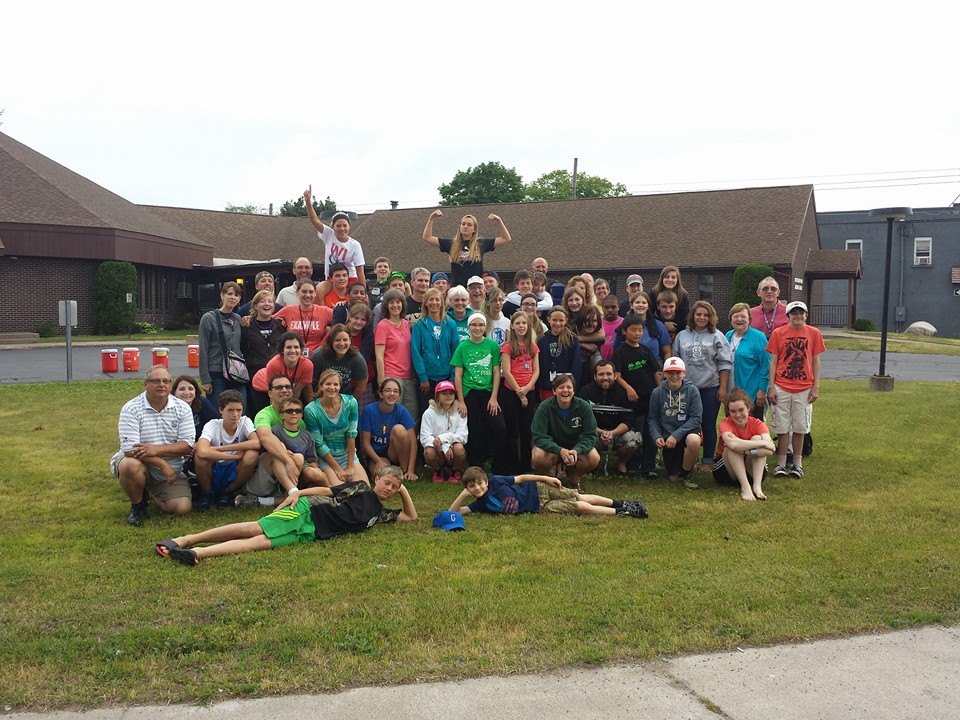
A big THANK YOU to each of you who prayed for our team this last week. We had a great week up in “the Soo“.

Our trip started out a  little rocky. Forty minuets from home our church van broke down.  But thankfully after a few calls, and the arrival of help and a new vehicle, we were back on our way (in case you’re wondering the van is now fixed and back at Fellowship). This was really the only hiccup in our week.

The rest of our mission went surprisingly well.  At our home base in “the Soo” we met our fellow workers,  a church group from upstate New York. They were great. And our teams bonded easily.

During the week our groups combined and broke up into four ministry teams. These teams served together at the church where we stayed and out in the community.

My prayer, among other things, was that as a team we would make Christ known. I really feel like that prayer was answered.

Here are just a few ways Christ was made known this last week:

  • At Kid’s Club we made Christ known to about 40 students through sharing the story of God’s love via skits, story time, crafts, and a memory verse. We also built relationships with them through games, hanging out time, and by just listening to their stories.
  • On the Farm we made Christ known through our team’s work ethic. That crew cheerfully cared for and cleaned up after the animals, and  put up 1,000 feet of fence to make a new goat pen. The owner of the farm commented that she was amazed at their ability to do whatever was needed, work with no supervision, and accomplish exactly what she needed done that week.
  • At the Fairgrounds Christ was made known through the positive attitudes of those who cleaned, painted, and repaired a community building. It was a lot of grunt work, but the team never complained.  And those in the community noticed. Even though the work wasn’t glamorous (or likely even fun) the team served without complaining. And the community leaders expressed over and over again how grateful they were for the help.
  • At the Assisted Living Facility Christ was made known through time spent with the elderly. Most of it was just listening to their stories and joining them in playing leisurely games. But the team also took part in a car wash to help raise funds for the facility. Again their presence was greatly appreciated.

Overall every team member both on our team and from the NY church represented Jesus Christ well. Not only in the community but with each other and with themselves. Honestly, it was one of the greatest ministry groups I have ever had the privilege to be a part of.

And I know that it was not a coincidence.

It happened because God called amazing people to his mission. It happened because God called our amazing church to support us. And it happened because God called you to support us in prayer.

And because of all that, we were able to join with the mission of Jesus Christ already happening in “the Soo”, and, along with others, make Christ known.

Of course this is just an overview of the week. If you want to hear more details (and you definitely should) then please take some time to connect with a student or adult from our team. I’m sure they’d be happy to share with you how God used them and others to make Christ known.

Thanks again for all your support!